In Re: Mepung Tadar Bage, Member, Arunachal Pradesh Public Service Commission 2025 INSC 1047 - Art. 317 Constitution

You can read our notes on this judgment in our Supreme Court Daily Digests. If you are our subscriber, you should get it in our Whatsapp CaseCiter Community at about 9pm on every working day. If you are not our subscriber yet, you can register by clicking here:
In Re: Mepung Tadar Bage, Member, Arunachal Pradesh Public Service Commission 2025 INSC 1047 - Art. 317 Constitution
Constitution of India - Article 317 - For proving ‘misbehaviour’ under Article 317 of the Constitution of India, in order to remove a Chairman or Member of a Public Service Commission upon reference being made by the Hon’ble President of India, it is generally necessary to demonstrate with cogent material as per the procedure laid down that the conduct complained of and charges formulated are attributable to the individual in question - The term ‘misbehaviour' must be given a wider import; it cannot be narrowly construed and is required to be understood in the context of the alleged misbehaviour complained of, the office in question and the standards required to be maintained by a person as a necessary corollary of holding such office. It is different from the term ‘proved misbehaviour’ under Article 124(4) of the Constitution of India. The scheme of Article 317 of the Constitution of India is such that misbehaviour by a member of Public Service Commission has to be established in an inquiry conducted by the Supreme Court upon reference by the Hon’ble President of India, and only then the Chairman or Members may be removed from the office, whereas under clause 4 of Article 124 of the Constitution of India, ‘proved misbehaviour’ is a condition precedent for the Parliament to move an address before the Hon’ble President of India for removal of a Judge of the Supreme Court from the office, which has to be proved before a separate Committee constituted under the appropriate legislation - Instances of physical violence between the members, non-declaration of relatives participating in a recruitment process conducted by the Commission and attempting to influence the Commission to favour a particular candidate have all been considered as instances of ‘misbehaviour’ by this Court. (Para 37-42)
Constitution of India - Article 317 - Removal on the ground of misbehaviour is individual and not collective in nature- Article 317 of the Constitution of India does not envisage the principle of Collective Responsibility, unlike some other provisions of the Constitution of India. (Para 63-64)
Constitution of India - Articles 315 to 320 - Complete code on Public Service Commissions, providing them independence for fair discharge of their functions, as well as ensuring their security and protection from any external interference- The Chairperson and Members of a Public Service Commission must conform to a standard of conduct that is unimpeachable in the eyes of law. Their actions, decisions, and even omissions must reflect the fairness, and highest degree of integrity inherent in these constitutional offices. The standard of behaviour expected of them is thus neither ordinary nor comparable to that of other public servants; it is elevated by the very nature of the institution they represent. The emoval of any such officeholder on the ground of misbehaviour, therefore, must be assessed on these anvils. In a democratic polity that is constantly being shaped by ethos of transformative constitutionalism, the moral compass of those entrusted with such public responsibilities must remain unblemished. (Para 46)
Civil Servants - Civil Servants are indispensable to the governance of the country. The responsibility of efficiently and diligently implementing the laws has been bestowed upon them. Well thought of and planned policies can crumble, like a sandcastle, at the first hit of waves, if there isn’t a strong administration in place to implement them. In a lot of ways, the Civil Servants are the ambassadors of democracy; the first point of contact between the citizenry and the government. It is through them that the government is able to successfully implement the countless welfare schemes for the larger good of the public. (Para 1)
Interpretation of Statutes - Constituent Assembly Debates is one such external aid available to the Court to understand the rationale behind a particular provision and interpreting that provision in the light of the intention of the framers of the Constitution. (Para 20)
Sunita vs State Of Karnataka
- Art.32,226 Constitution
Constitution of India - Article 32 - A petition under Article 32 of the Constitution of India assailing an order of the High Court passed under Article 226 of the Constitution of India is not maintainable - Referred to Naresh Shridhar Mirajkar vs. State of Maharashtra.
Case Info
Case Name and Neutral Citation
- Case Name: In Re: Mepung Tadar Bage, Member, Arunachal Pradesh Public Service Commission
- Neutral Citation: 2025 INSC 1047
Coram
- Coram: J.K. Maheshwari, J. and Aravind Kumar, J.
Judgment Date
- Date of Judgment: August 28, 2025
Caselaws and Citations Referred
- Reference under Article 317(1) of the Constitution of India, In re, (Special Reference No. 1 of 1983)
- (1983) 4 SCC 258
- (1990) 4 SCC 262
- Sher Singh, In Re (Reference Case No. 1 of 1995)
- (1997) 3 SCC 216
- Ram Ashray Yadav (Dr.), Chairman, Bihar Public Service Commission, In R/o (Special Reference No. 1 of 1997)
- (2000) 4 SCC 309
- Sayalee Sajeev Joshi (Smt), Member, Maharashtra Public Service Commission, In Re (Reference No. 1 of 2004)
- (2007) 11 SCC 547
- Reference under Article 317(1) of the Constitution of India, In re, (Reference No. 1 of 2003)
- (2009) 1 SCC 337
- Reference Under Article 317(1) of the Constitution of India, Chhattisgarh Public Service Commission, (Reference No. 1 of 2006)
- (2009) 8 SCC 41
- Mehar Singh Saini, In re (Reference No. 2 of 2008)
- (2010) 13 SCC 586
- C. Ravichandran Iyer v. Justice A.M. Bhattacharjee
- (1995) 5 SCC 457
- Krishna Swami v. Union of India
- (1992) 4 SCC 605
- Common Cause v. Union of India
- (1999) 6 SCC 667
- State (NCT of Delhi) v. Union of India
- (2018) 8 SCC 501
- Ram Jawaya Kapur v. State of Punjab
- AIR 1955 SC 549
Statutes/Laws Referred
- Constitution of India
- Article 317 (removal and suspension of a member of a Public Service Commission)
- Article 316 (appointment and term of office of members)
- Article 315–320 (Public Service Commissions)
- Article 124(4) (removal of Supreme Court Judges)
- Article 145 (procedure for Supreme Court)
- Article 319(d) (bar on employment after ceasing office)
- Indian Penal Code, 1860
- Sections 120-B, 420, 406, 407, 409
- Prevention of Corruption Act, 1988
- Sections 7, 8, 13(2)
- Supreme Court Rules, 2013
- Order XLIII (procedure for inquiry under Article 317)
- Right to Information Act, 2005
Other References
- Constituent Assembly Debates (CAD, Vol. 9, Vol. 11)
- Advanced Law Lexicon, 7th Edn., 2024 by P. Ramanatha Aiyar
- Black’s Law Dictionary, 6th Edn.
- Encyclopedic Law Dictionary, 3rd Edn.
When #SupremeCourt gave a report on reference made by the President of India under Article 317(1) of the Constitution of India: https://t.co/WunTTfx40h pic.twitter.com/KRVaZKfNWI
— CiteCase 🇮🇳 (@CiteCase) August 29, 2025
#SupremeCourt on the scope of Article 317 Reference: https://t.co/doL6mOgHoM pic.twitter.com/iKKqN3GJ7X
— CiteCase 🇮🇳 (@CiteCase) August 28, 2025
#SupremeCourt on Civil Servants: https://t.co/WunTTfx40h pic.twitter.com/ZxFSkOtHYA
— CiteCase 🇮🇳 (@CiteCase) August 28, 2025
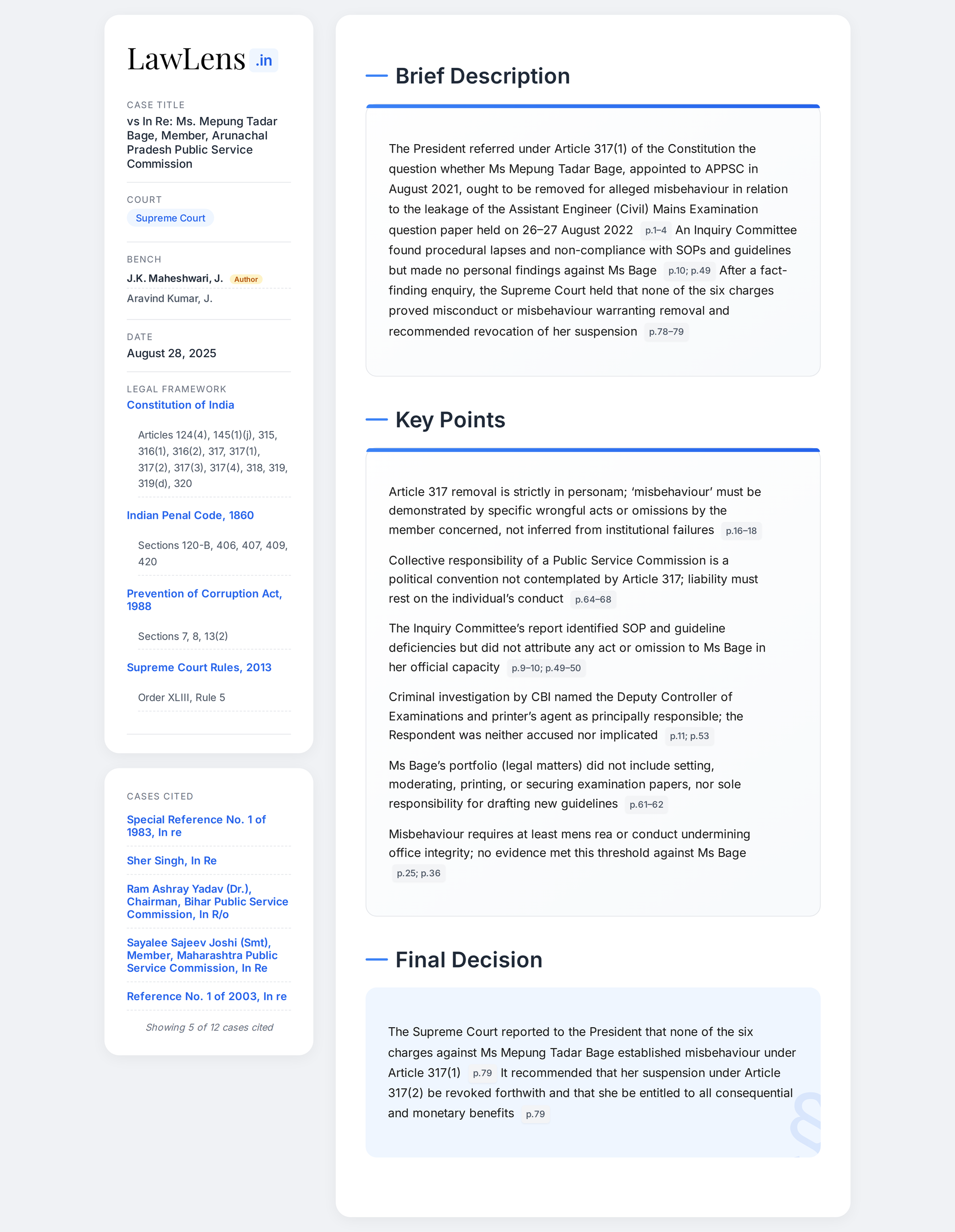
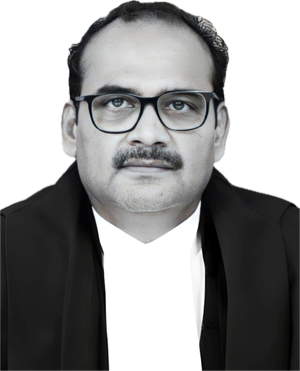
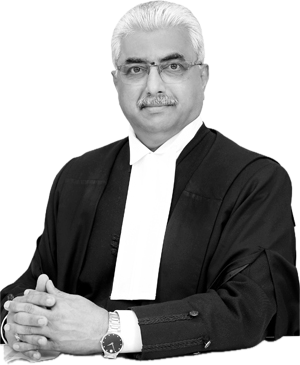
Justice JK Maheshwari and Justice Aravind Kumar [Image Source: SCI Website]